When you click the link, it will take you to the corresponding page.
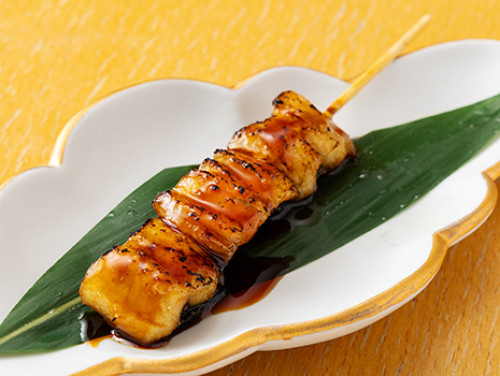
九州産活鰻蒲焼き串
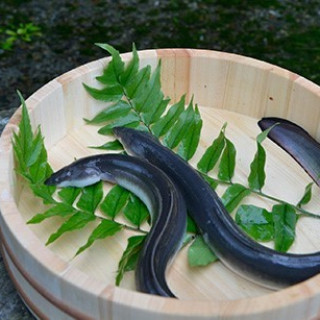
Also known as freshwater eel or simply eel. In Japanese, it is called "うなぎ" (unagi). Eels are born in the ocean, live in rivers, and when it's time to spawn, they return to the ocean to lay eggs and then end their lives. This type of fish is called anadromous. Conversely, fishes like salmon or smelt, which are born in rivers and live in the ocean and return to rivers for spawning, are termed as catadromous. In Korea, people eat chicken soup on specific days, whereas in Japan, people consume eel on a day called "土用の丑の日" (Doyou no Ushinohi). This tradition is said to have been started by a late Edo period scholar, inventor, potter, and pharmacist named Hiraga Gennai (1728-1780). One summer, an eel shop owner who was not doing good business sought advice from Gennai. In Japan, there was an old custom of eating foods starting with "う" (u) on "土用の丑の日," such as udon, umeboshi (pickled plum), and uri (gourd). Taking inspiration from this, Gennai suggested placing a sign in front of the shop saying "Today is Ushinohi." After this, people flocked to eat eel on this day, and other eel shops followed suit, establishing the present-day Ushinohi = eel culture. Hiraga Gennai, who also crafted various promotional phrases for eels
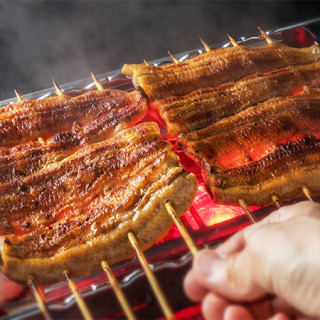
Kabayaki is a cooking method where the belly of a long, slender fish is split open, the bones are removed, and the fish is cut into sections, skewered, brushed with sauce, and grilled. Although it mainly refers to grilled eel, this method is also used for fish like pacific saury and sardines. Before the Edo period, whole eels were cut into chunks and grilled on skewers. Because their appearance resembled the seed heads of cattails (蒲, gama), the dish was called gama-yaki. Over time, the pronunciation changed to kabayaki. From the Edo period onward, the current style—splitting the eel, removing the bones, cutting it into pieces, skewering, and grilling with a sweet soy-based sauce (tare)—became common, while the name "kabayaki" remained unchanged.